
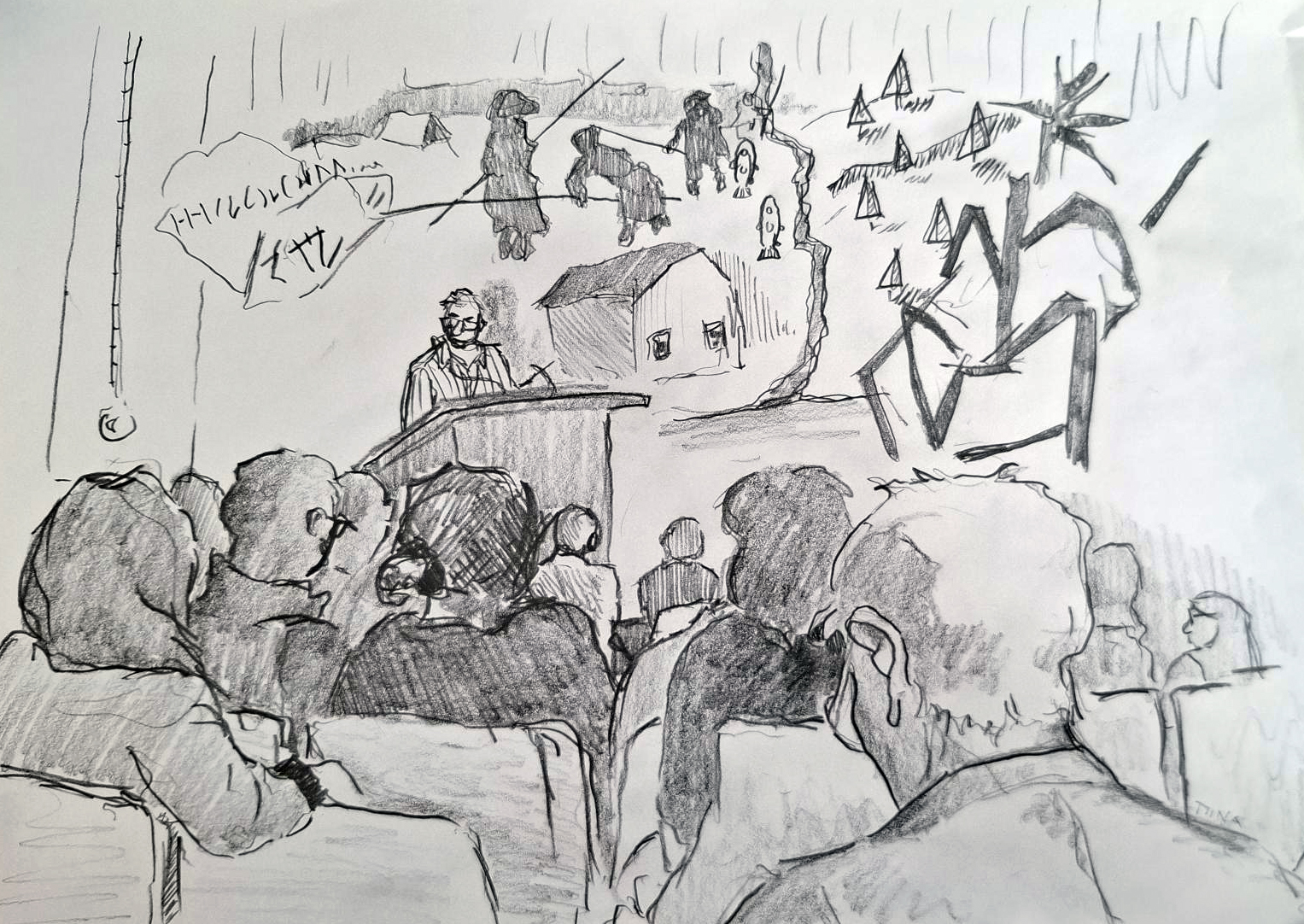
Ingredients for Imagining History – The Maupertuis Expedition 290 Symposium Brought Together Different Times and People
The three-day symposium was an intensive journey into the history of science and the sites associated with it in the Torne Valley.
Physicists, historians, literary scholars, mathematicians, and surveyors. Writers, filmmakers, teachers, students, and tourism professionals. Retirees, middle-aged participants, and young people. Visitors from Central Europe, Sweden, and Finland, from both the south and the north.
Held in Tornio and the Torne Valley on September 4–6, the Maupertuis Expedition 290 Symposium served as a meeting place for nearly one hundred people from diverse backgrounds.
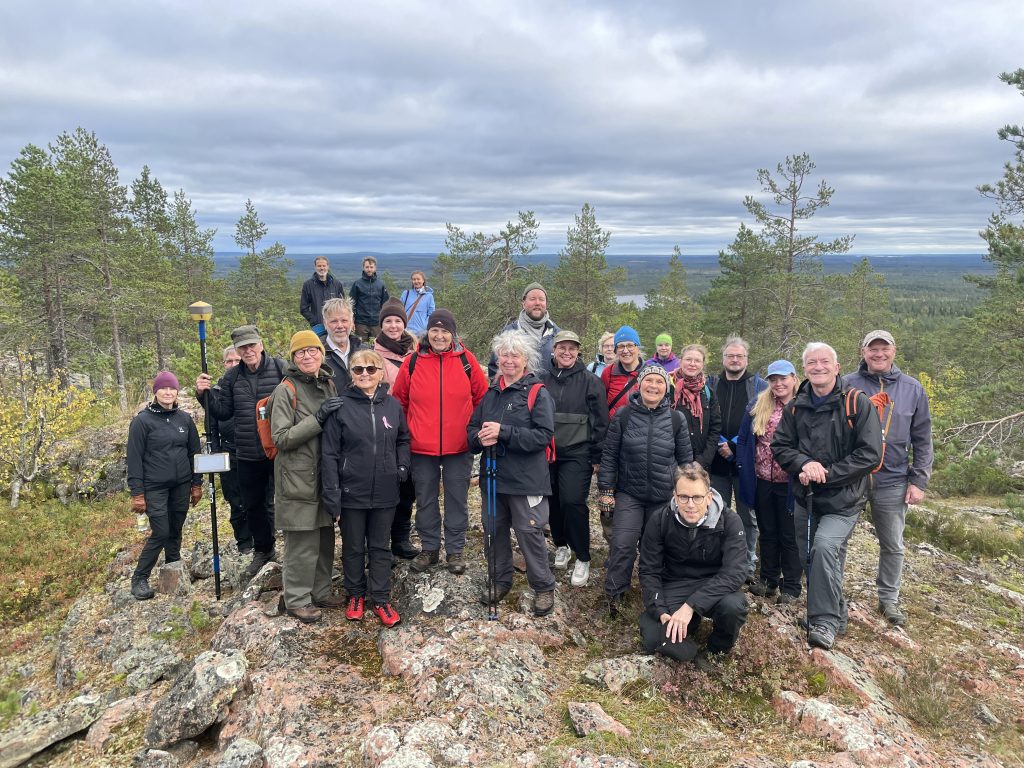
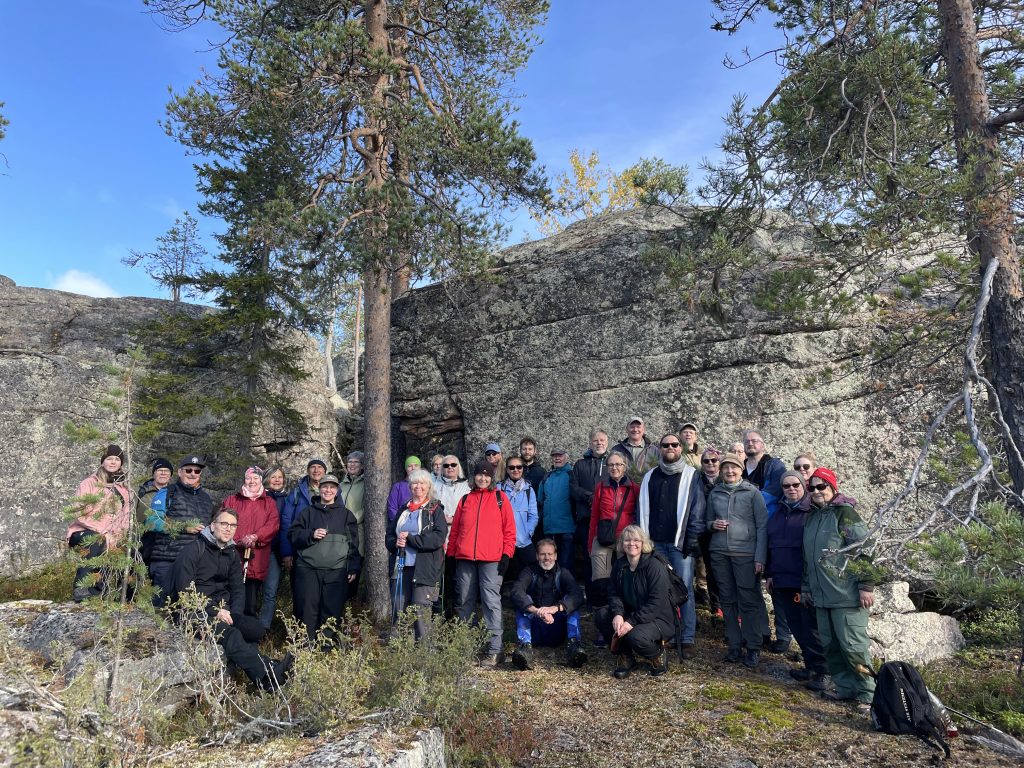
Around forty participants continued their journey after the lecture sessions, visiting the geodetic measurement points in Ylitornio and Pello. Throughout the weekend, a bus traveled between the measurement sites of Huitaperi, Aavasaksa, Kittisvaara, and Niemivaara.
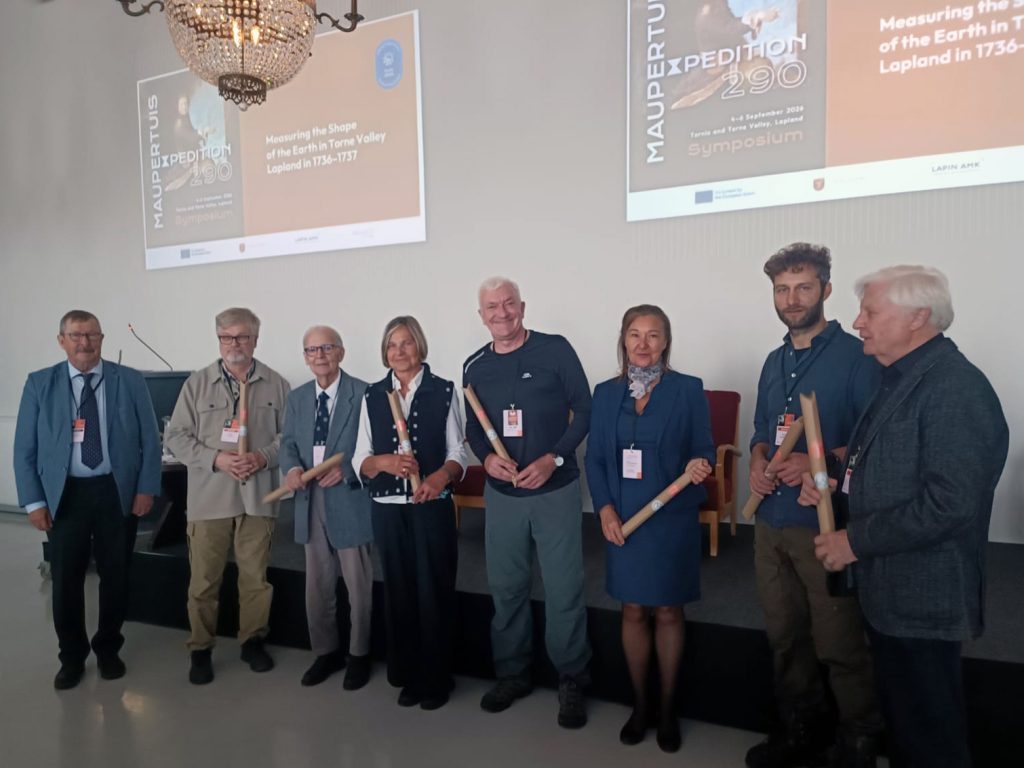
Knowledge Is Created Together
In his opening remarks, Jukka Kujala, Mayor of Tornio and Chair of the Torne Valley Council, reminded the audience that during Maupertuis’ time the Torne River was not a border river between two nations. Today, the triangulation network is spread across two countries and several municipalities.
Kujala emphasized that the successful execution of the geodetic survey of 1736–1737 was largely due to the combination of two kinds of knowledge: the scientific expertise of the French academicians and the local knowledge possessed by the region’s inhabitants.
“Science crossed the borders, languages and cultures. Knowledge was created together.”
According to Kujala, the story of Maupertuis beautifully illustrates the importance of cooperation.
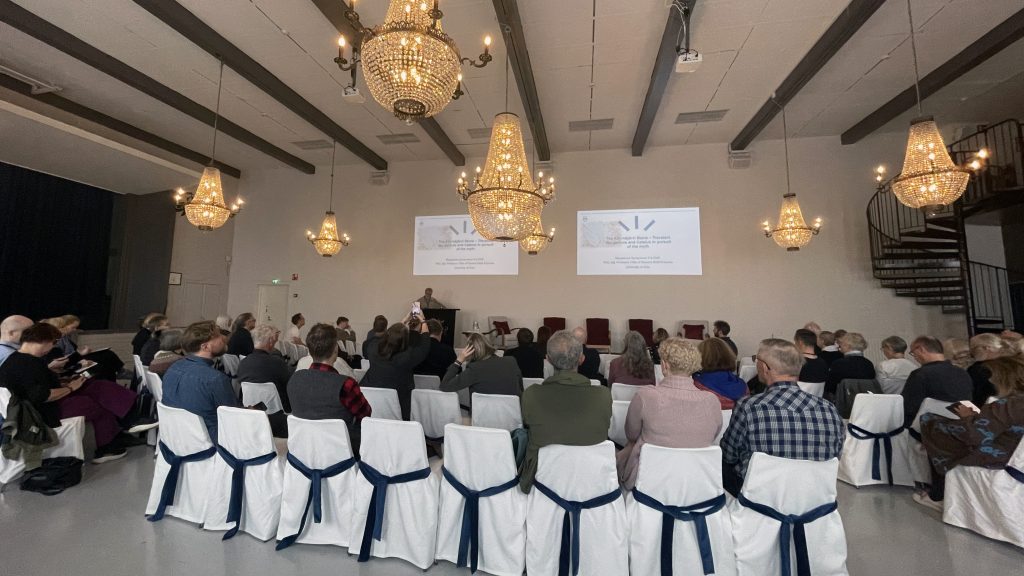
The symposium presentations demonstrated that Maupertuis was one of the leading natural scientists of his era and that the Torne Valley genuinely became a center of scientific activity for a period of time.
The symposium moderator, science historian Johan Stén of the University of Helsinki, emphasized that the degree-measurement expedition was, above all, a collaborative effort between two states, France and Sweden. The purpose of the expedition was not conquest or colonization but the production of new knowledge. In its time, this was highly unusual.
Following in Maupertuis’ Footsteps to the Measurement Hills
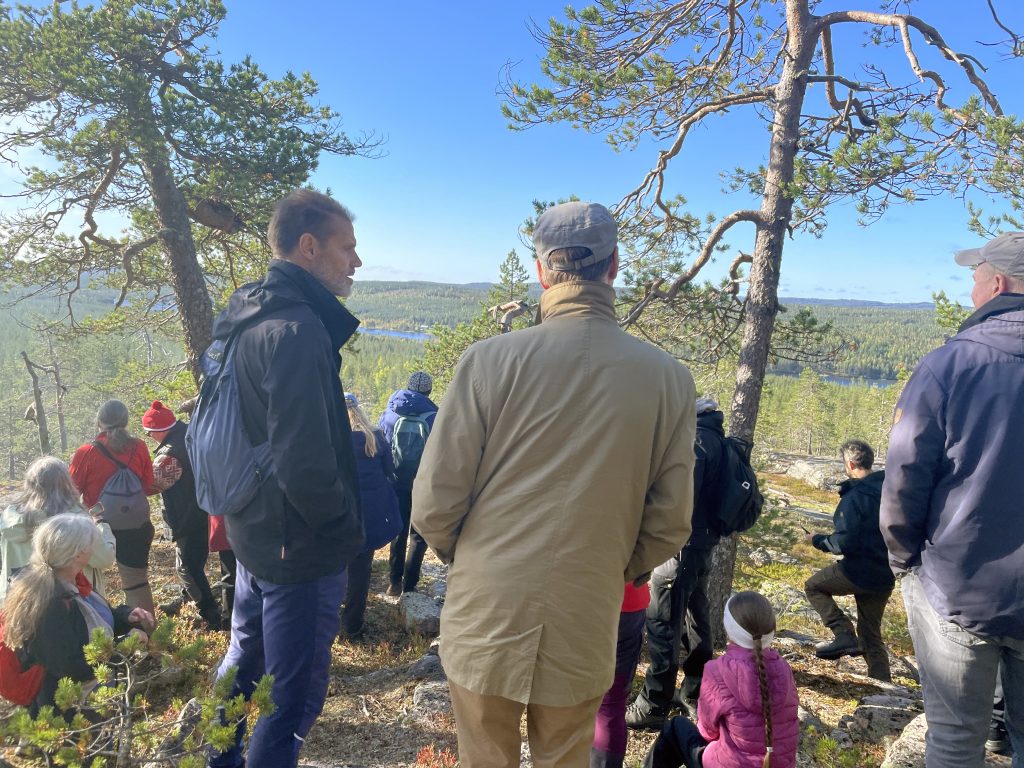
The weather was favorable during the first weekend of September. The group of visitors traveled through the hills much as Maupertuis’ team had done nearly three centuries earlier. The quadrant once used for angular measurements had been replaced by modern surveying equipment, visible in the photograph below on the left.
More material from the symposium will be published later.
Next Steps
The Maupertuis Expedition 290 symposium is part of the ERDF-funded project The Maupertuis Legacy: Digital Solutions for Business Growth. The Maupertuis Foundation is implementing the project together with Lapland University of Applied Sciences.
One of the symposium’s objectives was to increase local tourism operators’ knowledge of the story behind Maupertuis’ geodetic survey.
The experiences and insights gained from the symposium will be utilized in the project.
