Sylvie Requemora Summarizes the Adventures of Jean-François Regnard in the First Episode of a New Video Series
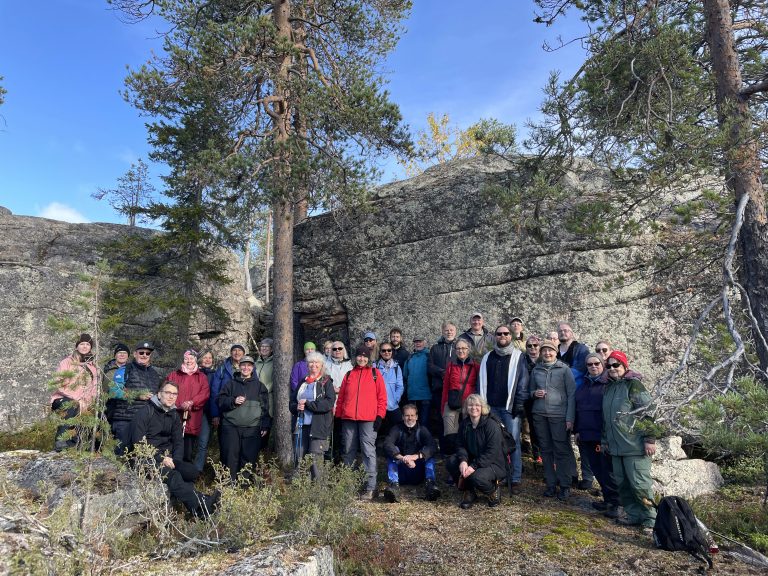
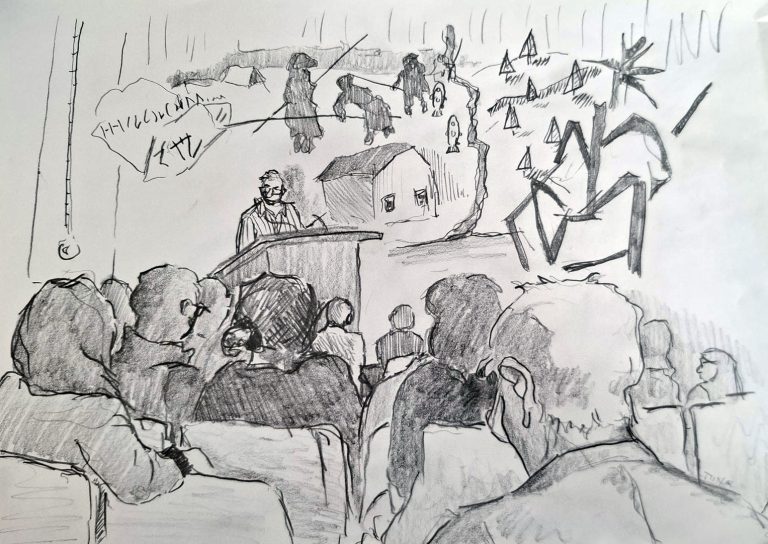
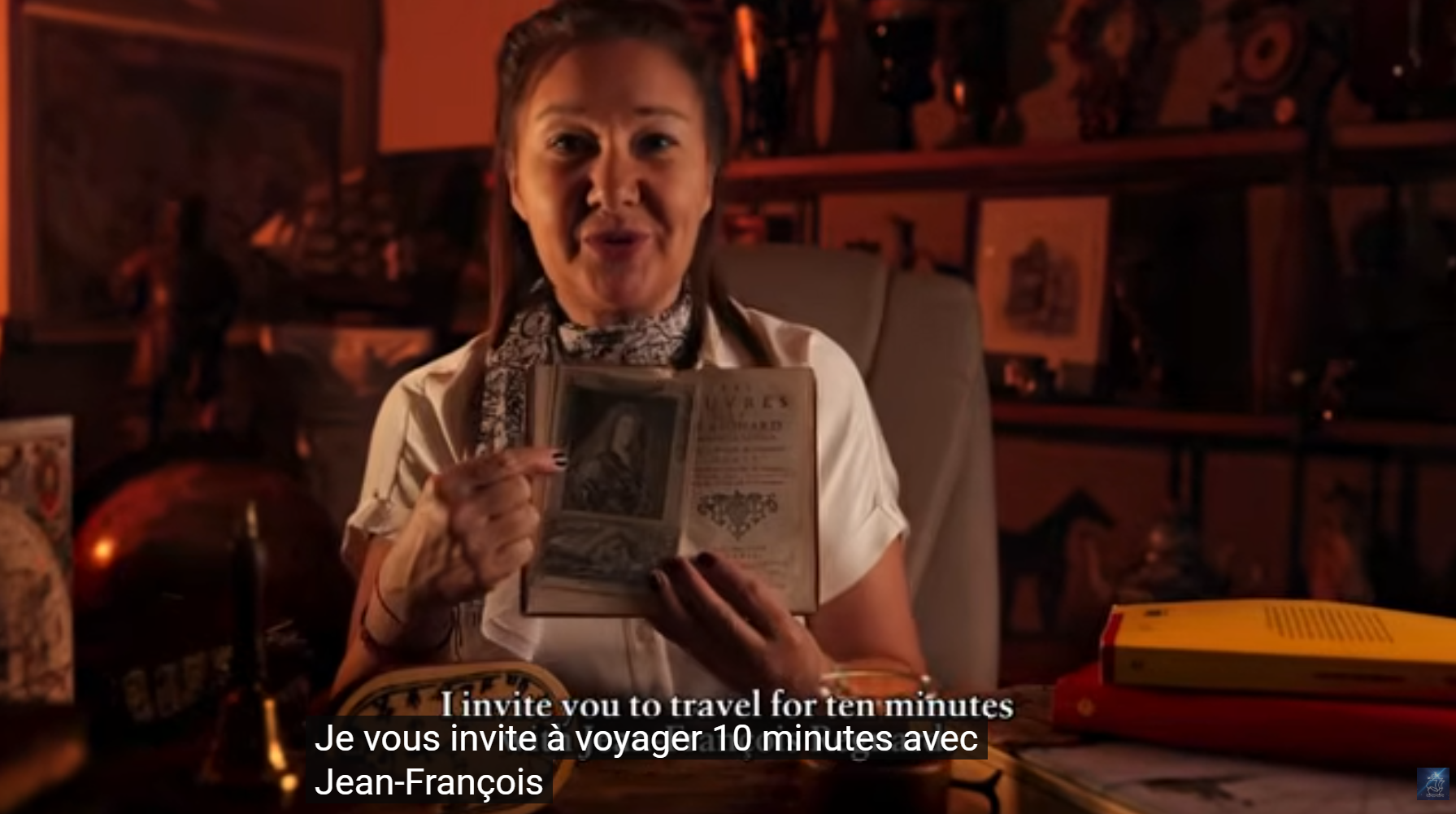
At the Maupertuis Expedition 290 Symposium in Torneå, the video Voyager 10 mn avec Jean-François Regnard received a small premiere. It tells the story of Jean-François Regnard.
The video is part of a series produced by the French Centre for Travel Writing Studies (Le Centre de Recherches sur la Littérature des Voyages, CRLV). Each episode tells a ten-minute story from the history of travel writing.
The video was produced by Agence Biyoo (Studio Provence).
The narrator and expert featured in the first episode is Sylvie Requemora, who was one of the guest speakers at the Maupertuis Symposium. Requemora (PhD) is Professor of Literature at Aix-Marseille Université and a member of the Institut Universitaire de France. She specializes in seventeenth-century travel literature.
In particular, she has studied the French adventurer Jean-François Regnard, whose travel account Voyage en Laponie (1731) was probably read by Maupertuis and his companions before their own journey to the North.
The video can be viewed here or on the CRLV website.
Who Was Regnard?
Jean-François Regnard (1655–1709) was a French playwright and adventurer whose life story sounds almost legendary. It includes a substantial inheritance and a taste for gambling, Algerian pirates, enslavement and eventual release through the payment of a ransom, romantic adventures and disappointments, and extensive travels across Europe.
After returning to France and Paris, Regnard gained fame as a successful playwright. True to his reputation as a lover of life’s pleasures, he died at his country estate from digestive ailments.
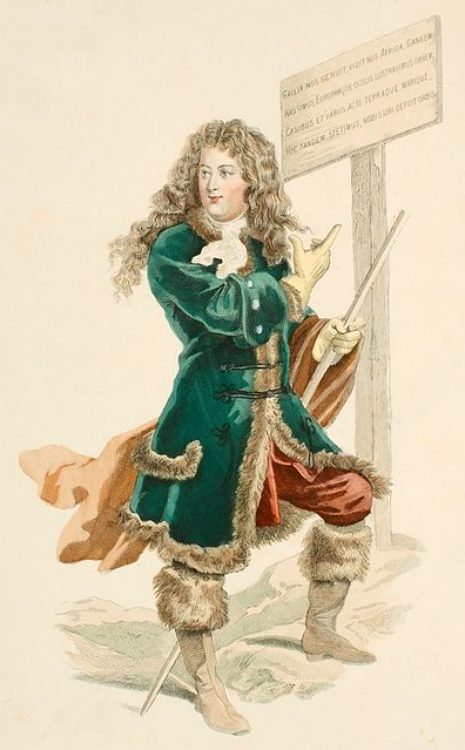
Regnard wrote extensive accounts of his travels. He journeyed to the North in 1681, but his travel narrative Voyage en Laponie was published posthumously only in 1731, more than twenty years after his death.
It is highly likely that Maupertuis and the other members of his expedition had read Regnard’s descriptions of Lapland before undertaking their own journey north.
Regnard presented detailed descriptions of Sámi life as if they were based on his own observations. In reality, a large part of his text was borrowed from Johannes Schefferus’s Lapponia (1674). The perspective in Regnard’s work is distinctly that of an outsider and tends to exoticize its subject.
Regnard’s travelling companion de Fercourt commented on the travel account by saying that it could hardly be more inaccurate. Regnard’s travel narrative should therefore be read with a certain degree of caution, despite the author’s considerable talent as a writer of comedies.
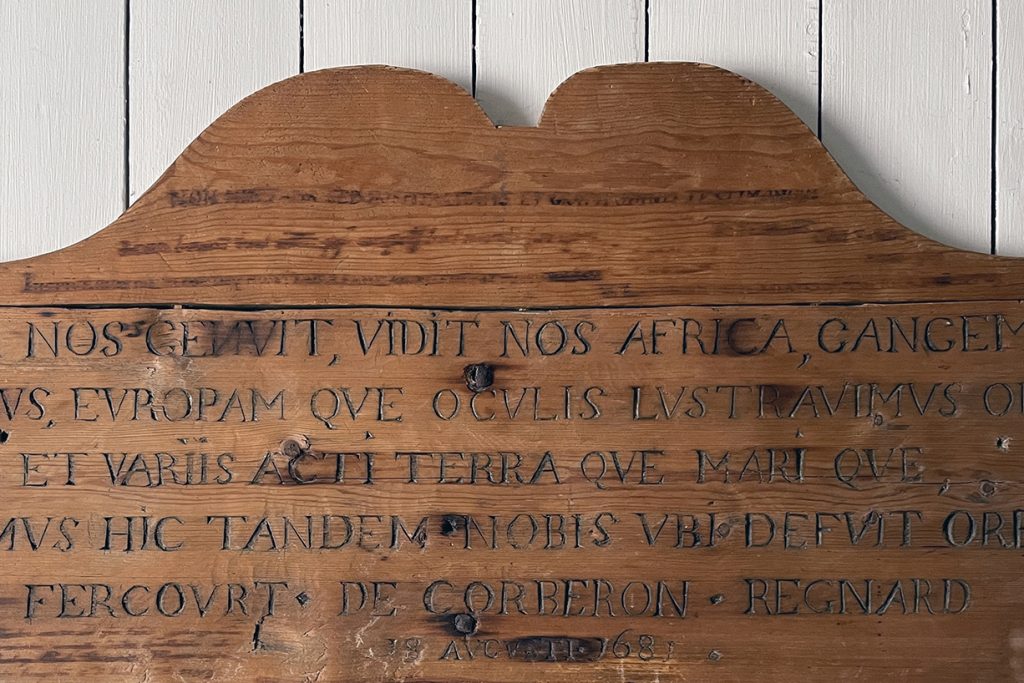
A Traveller’s Sign in Jukkasjärvi Church
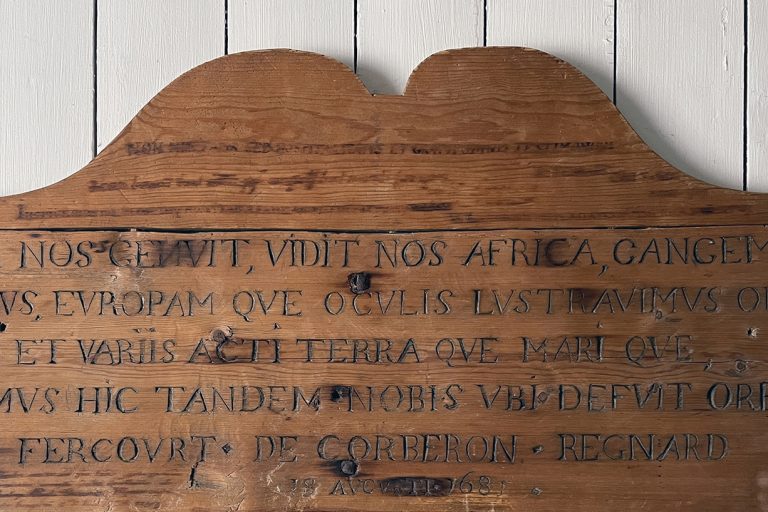
In addition to studying the life of Regnard, Requemora has examined the wooden memorial slabs that travellers, including Regnard himself, left at Jukkasjärvi Church in northern Sweden.
Regnard’s journey reached Lake Tornio, which for him represented the northern edge of the world.
The inscription on the Jukkasjärvi slab reads:
Gallia nos genuit, vidit nos Africa, Gangem
Hausimus, Europam que oculis lustravimus omnem:
Casibus et variis acti terra que mari que,
Hic tandem stetimus, nobis ubi defuit orbis.De Fercout, De Corberon, Regnard
18 Augusti 1681
France gave us birth; Africa saw us. We drank from the Ganges
and surveyed all of Europe with our own eyes.
Driven by many adventures, by land and by sea,
we finally came to a halt here, where the world came to an end for us.De Fercourt, De Corberon, Regnard
18 August 1681
Read more: You can read more about this and the other memorial slabs in another article: The Wooden Slabs of Jukkasjärvi Bear Witness to the Significance of Journeys to Distant Lands
Links:
If you would like to explore the French-language work Voyage en Laponie, a digitized edition published in 1875 is available online, for example here: https://wellcomecollection.org/works/n6wpbehc.
Sources:
Sylvie Requemora. “Signs of Travel and Memory: The Case of the Wooden Slabs in Jukkasjärvi (1681–1736) “. In Time and Temporalities in EuropeanTravel Writing. Edited by Paula Henrikson ja Christina Kullberg, London and New York, Routledge, 2021, pp. 75-100.